What are the key stages in the aluminum extrusion process?
- Billet preparation and heating
- Die preparation and loading
- Extrusion
- Cooling
- Stretching and straightening
- Cutting and finishing
Overview
- Extruded aluminum profiles are widely used in modern construction, but their quality depends on precise manufacturing.
- Understanding stages such as billet preparation, die setup, extrusion, cooling, stretching, and finishing helps ensure structural accuracy, durability, and reliable performance for architectural and structural applications.
Extruded aluminum profiles are some of the most common materials that professionals use for complex build designs. Their versatility makes them ideal for crafting customized shapes for modern architectural finishes.
However, their performance largely depends on how they were manufactured. Developers must have a comprehensive understanding of the key stages in the aluminum extrusion process to ensure they achieve the precise finish their project requires.
As a top provider of aluminum profiles in the Philippines, AMC Aluminum offers expert technical support that designers need to ensure quality and durability at every stage of the extrusion process. Read on to learn how each step contributes to consistent performance throughout your project’s lifespan.
Billet Preparation and Heating
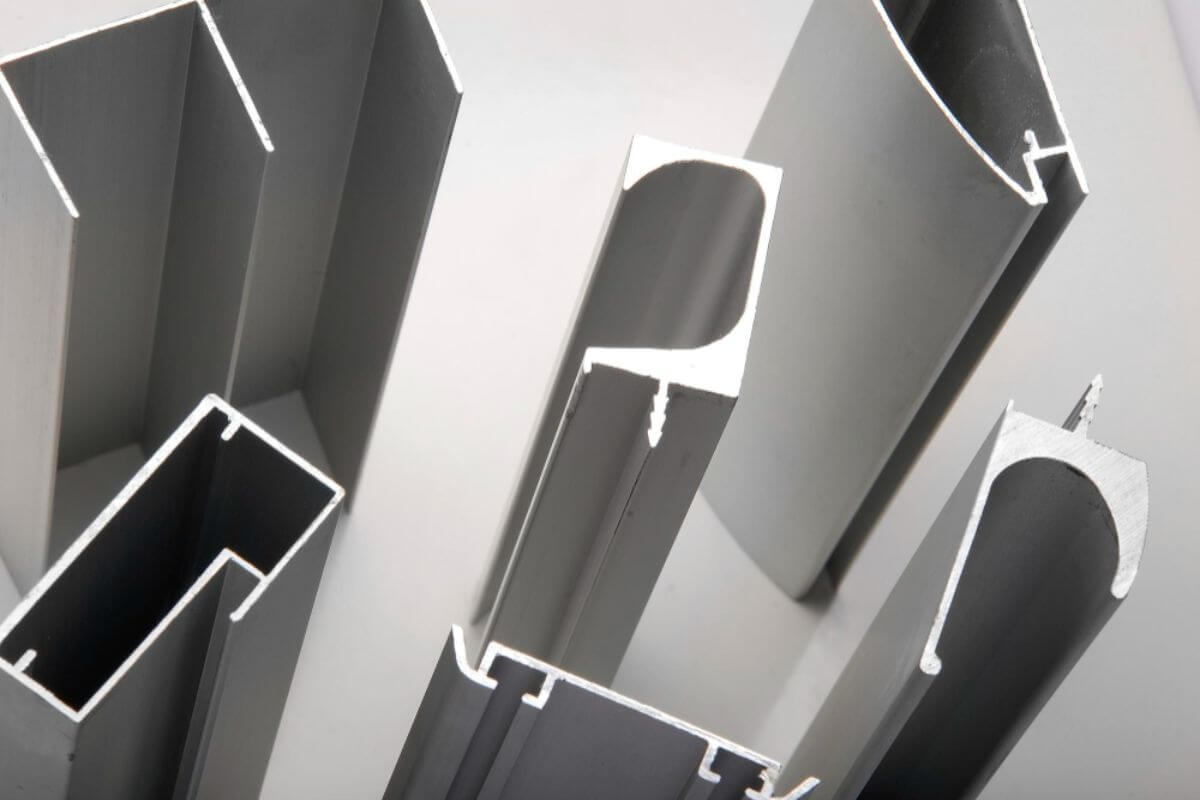
Extrusion processes often begin with a solid, cylindrical aluminum alloy billet, which is cut to length from a long log. Before extrusion, this billet is heated in a furnace to a temperature between 400°C and 500°C to make it soft and malleable. This preheating ensures the metal can flow properly through the die without breaking.
Once preheated, the billet is then coated with a press lubricant and loaded into the hydraulic press container. At this stage, the aluminum becomes plastically deformable, ready to be forced through the die to form the precise shape of the profile.
Proper billet preparation supports precision in complex profile shapes for modern projects. This not only ensures a smoother extrusion process but also protects both the tooling and material from damage.
Die Preparation and Loading
The die is a precision-machined tool that dictates the final shape of the aluminum profile. Each hardened steel die is precisely machined to match the intended architectural or structural profile design. Before extrusion begins, the die is also preheated to a temperature between 400°C and 500°C. This helps ensure a uniform metal flow and prevents damage caused by thermal shock during operation.
Loading the die into the press requires meticulous alignment. If even slight deviations occur, they can create uneven pressures that accelerate wear on press components and compromise profile uniformity. Securing the die correctly is highly critical to protect tooling and ensure every extrusion meets the strict standards required for every project.
Extrusion
The defining stage in aluminum profile manufacturing occurs when immense hydraulic force pushes the softened billet through the die opening. After heating, the billet is transferred into the extrusion press and exposed to high pressure. This force compels the aluminum to flow through the die cavity and emerge as a continuous profile with the desired cross-section.
During this stage, precise control over pressure, speed, and temperature ensures the profile forms evenly along its entire length. Manufacturers take extra caution to maintain precision here, as any instability can affect surface quality. When managed correctly, the extrusion process turns the billet into a high-strength aluminum component ready for further processing.
Cooling
As aluminum exits the extrusion press, it undergoes rapid cooling or quenching to stabilize its mechanical properties. High-velocity air fans or water sprays quickly reduce the temperature, locking in the alloy’s structure and preventing grain growth, strength loss, or distortion during solidification.
Effective quenching directly impacts the precision of the finished profile, ensuring that complex cross-sections maintain their intended dimensions. It not only preserves surface quality but also prevents irregularities that affect both installation and aesthetic consistency in architectural applications.
Stretching and Straightening
Since the aluminum may have twisted or bowed during the heating and cooling process, it’s moved to a stretcher for straightening and alignment. The profile is grabbed at both ends by hydraulic or pneumatic clamps and pulled carefully to remove any distortion.
The stretching process performs work hardening, creating micro-realignments that increase the aluminum’s hardness and tensile strength while correcting distortions. This ensures the profiles meet strict straightness tolerances and maintain precise dimensions, allowing easier assembly and reducing the need for on-site adjustments.
Cutting and Finishing
Once the aluminum profiles have been straightened, they are then cut into specified lengths suitable for fabrication or direct installation. Precision saws help divide long extrusions into manageable sections while maintaining tight dimensional tolerances. These ensure accurate cutting, helping profiles meet project specifications required by both architects and contractors.
After cutting, the profiles undergo artificial aging, or a controlled thermal treatment that further increases the alloy’s strength and stability. Depending on the application, additional surface treatments such as anodizing or powder coating may then be applied.
These finishing processes enhance corrosion resistance and visual appearance for long-term architectural use.
Accurate lengths and smooth surfaces reduce the on-site adjustments needed to ensure window frames or other structural components fit into the overall framework.
Where to Get Extruded Aluminum Profiles
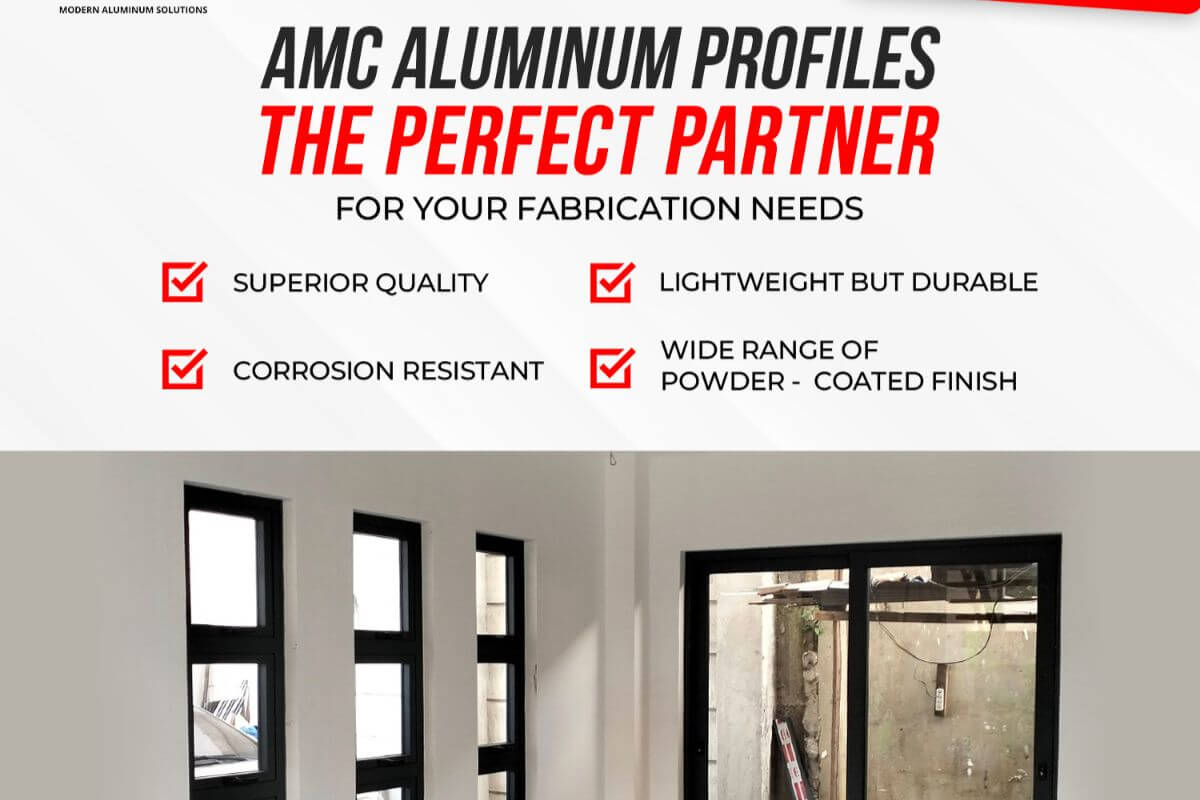
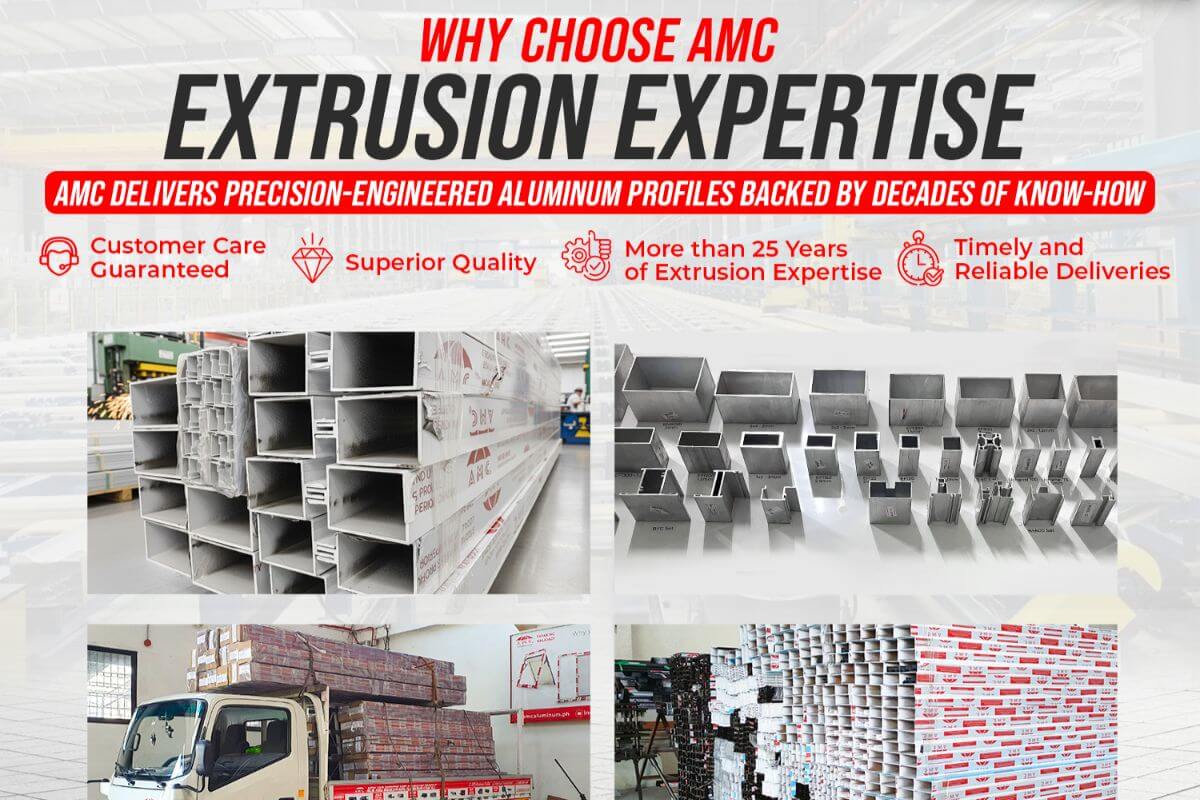
At AMC Aluminum, we produce precision-engineered aluminum profiles using advanced extrusion processes and strict quality control standards. From billet preparation to finishing, every stage ensures structural reliability and lasting visual appeal. With decades of experience in the Philippine construction sector, we provide professionals with dependable aluminum solutions and expert technical guidance.
Key Takeaway
Having comprehensive knowledge of the stages in the aluminum profile extrusion process allows designers and developers to better evaluate the quality of the materials they specify. When these steps are carefully controlled, the profiles become dependable components capable of meeting demanding architectural requirements.
AMC Aluminum applies rigorous process control and engineering expertise across every stage of extrusion. Get a quote today to secure expertly manufactured extruded aluminum profiles for your next project.

.jpg)
.jpg)
.jpg)