How to spec aluminum extruded profiles for long-term performance?
- Select the proper alloy and temper
- Specify strict geometrical tolerances
- Mandate protective surface treatments
- Account for environmental stress
- Verify industry standards
Overview
- Specifying aluminum profiles requires a focus on long-term performance.
- Key steps include choosing the right alloy and temper (like 6063-T5 or 6061-T6), enforcing strict geometric tolerances for fit, and mandating protective surface treatments.
- Additionally, designers must isolate dissimilar metals, allow for thermal expansion, and verify compliance with ISO industry standards.
Profile specification goes beyond basic catalog dimensions. To ensure long-term durability, you must define the profile’s structural and environmental performance requirements under actual field conditions.
Specification decisions influence not only fabrication outcomes but also how well the profiles will integrate with other building components. But how do you spec aluminum extruded profiles to achieve long-term performance? What factors should be prioritized during specification, and how do these decisions affect real-world installation and durability outcomes?
At this stage, the focus shifts toward performance expectations, system compatibility, and long-term application rather than surface-level material selection.
Select the Proper Alloy and Temper
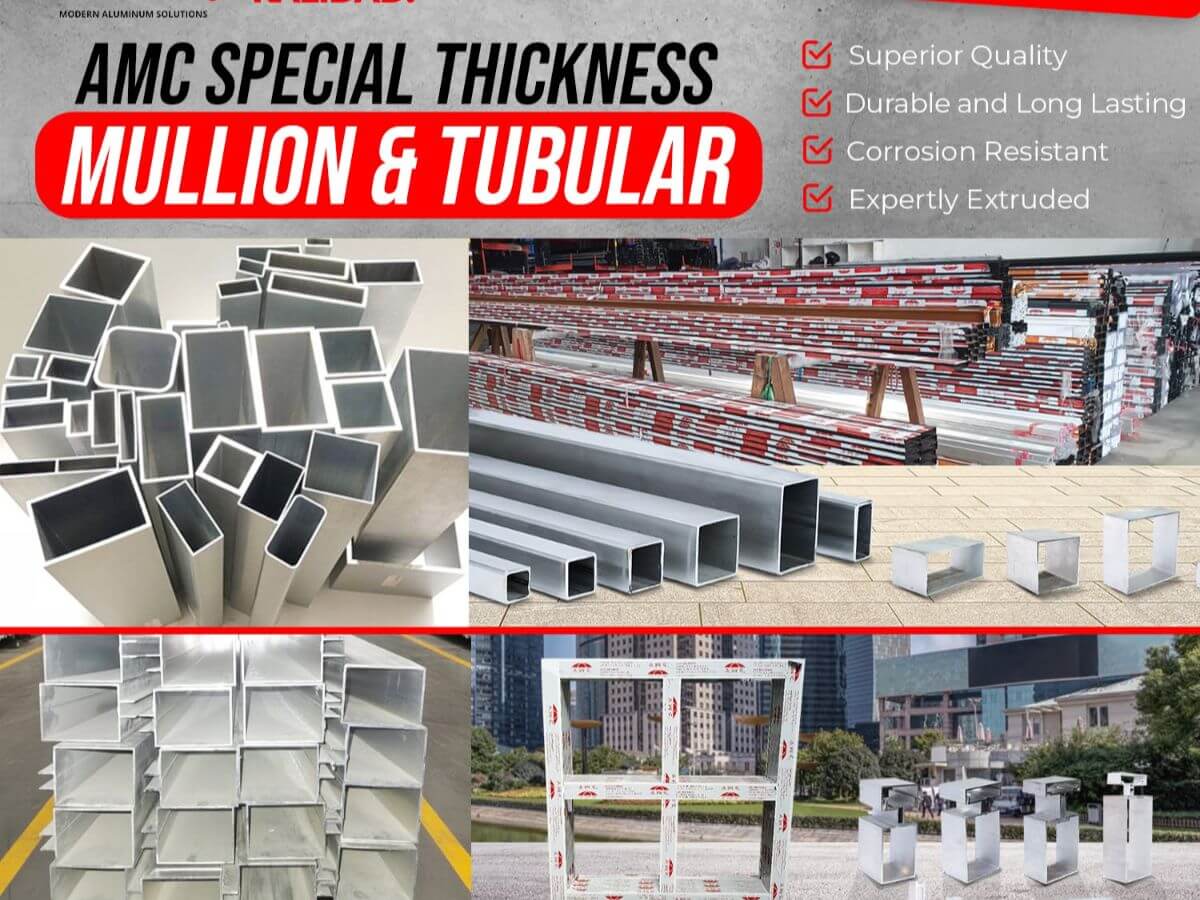
This specification step defines how an extruded aluminum profile will perform during fabrication and throughout its intended application. So, when specifying aluminum extruded profiles, consider the role of both the alloy and temper:
Alloy
- 6061: Best suited for applications requiring higher strength and structural performance.
- 6063: Commonly specified for architectural profiles, as it provides excellent extrudability, corrosion resistance, and a superior surface finish.
Temper
- T5: Provides good dimensional stability and is ideal for many architectural applications.
- T6: Offers higher strength and hardness, so it is suitable for more demanding structural applications.
For this reason, the alloy and temper should always be specified based on the intended function of the extruded aluminum profile, rather than selecting the strongest option by default.
Specify Strict Geometrical Tolerances
Every manufacturing process allows for slight dimensional variation. So, instead of expecting perfectly exact profiles, specifications should clearly define the acceptable dimensional and geometric tolerances before production begins.
For example, in moving parts or rigid structural framing applications, critical dimensions should be specified with appropriate dimensional and geometric tolerances to help ensure consistent fit and performance. Meanwhile, for hollow aluminum extruded profiles, wall thickness and profile dimensions should be controlled to meet the tolerances specified by design and extrusion standards.
This becomes even more important for custom aluminum extruded profiles, allowing you to achieve project-specific designs without compromising fit or functionality.
Mandate Protective Surface Treatments
The selected surface treatment should always match the intended application. For example, if you want your extruded profile to achieve long-term color stability even with minimal maintenance, anodizing can be a strong choice. Why? Because its finish remains highly stable under prolonged UV exposure without fading or peeling.
Meanwhile, for outdoor architectural projects that require design flexibility, powder coating is another widely specified option. When specifying powder-coated aluminum extruded profiles, choose UV-resistant exterior-grade coatings to help maintain the finish over time with a broader selection of colors and textures.
At AMC Aluminum, we offer both anodizing and powder coating processes to support a wide range of architectural and industrial project requirements. We help you ensure that your extruded aluminum profiles meet both performance and design specifications.
Account for Environmental Stress
When aluminum extruded profiles are used with dissimilar metals such as steel or copper, specifications should include isolation methods to help prevent galvanic corrosion. This helps protect the profile and maintain long-term system durability.
Specifications should also account for thermal movement. Because aluminum expands and contracts more than materials such as steel, long profile runs should be detailed with appropriate expansion allowances. Specifying sliding joint configurations allows controlled movement and helps reduce stress buildup, warping, or joint failure as temperatures change.
By accounting for these environmental conditions during the specification stage, aluminum extruded profiles can better maintain their structural integrity and compatibility.
Verify Industry Standards
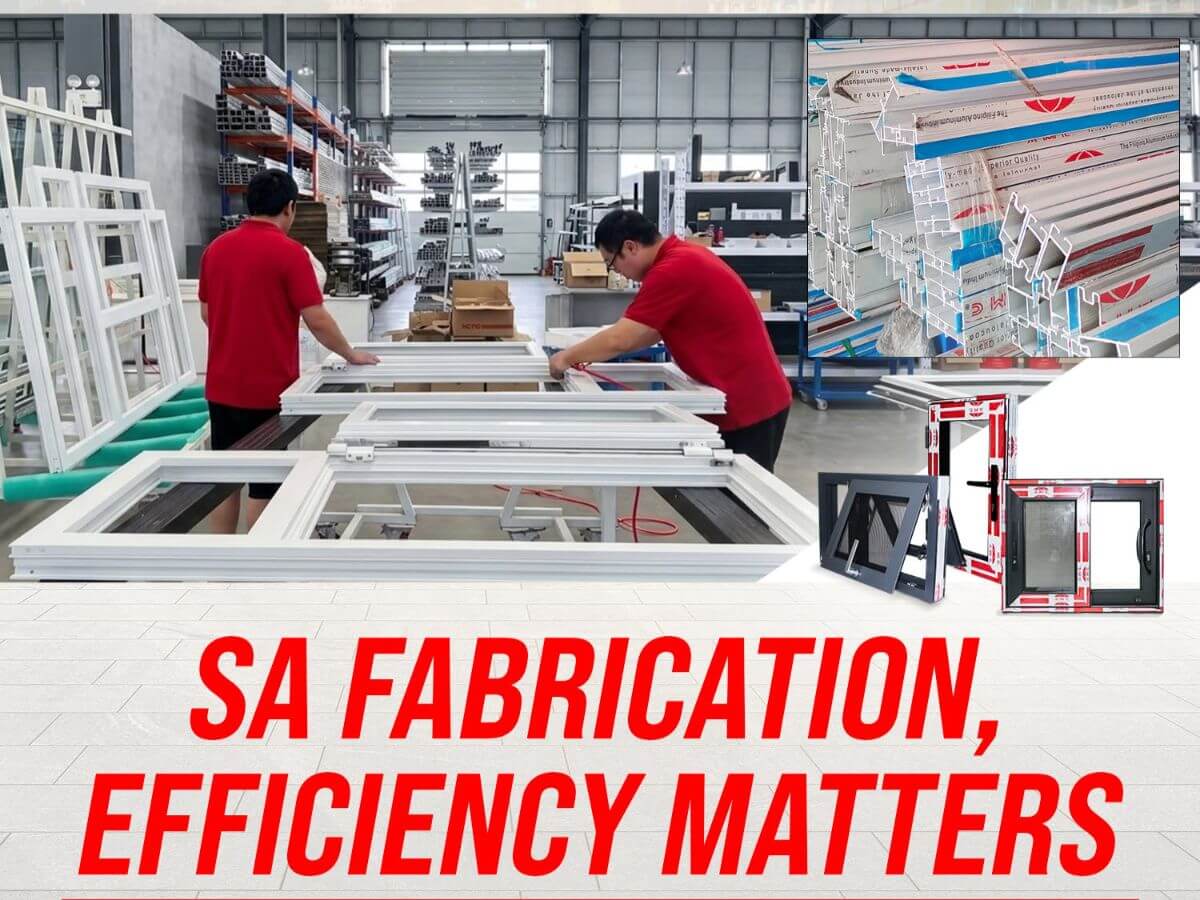
A complete specification should define not only the material and dimensions of an aluminum extruded profile but also the industry standards it is expected to meet.
Industry standards provide consistent criteria for evaluating alloy composition, mechanical properties, dimensional tolerances, and manufacturing quality. Verifying compliance with these standards helps improve consistency throughout fabrication, procurement, and installation while supporting reliable long-term performance.
At AMC Aluminum, our aluminum extruded profiles are manufactured in compliance with ISO 9001, ISO 14001, and CE standards. We also use ISO-grade quality billets and the latest Taiwan-made extrusion machinery to produce aluminum extruded profiles with consistent quality, precision, and manufacturing reliability.
Key Takeaway
How to spec aluminum extruded profiles for long-term performance starts with making specification decisions that support durability, compatibility, and reliability.
As a leading aluminum manufacturer, AMC Aluminum is committed to delivering high-quality aluminum extruded profiles backed by an ISO-certified quality management system and over 20 years of industry experience. We manufacture every product using advanced Taiwanese machinery to achieve consistent precision and quality.
To learn how we can support your next project with high-quality aluminum extrusion solutions, get in touch with our team now.

.jpg)
.jpg)
.jpg)